In English, subtle differences between words can often lead to confusion, especially when they sound similar or look almost the same in writing. Two such words that frequently cause misunderstanding are unkempt and unkept. Although they appear nearly identical, they have distinct meanings, uses, and origins. Understanding the difference between unkempt and unkept is important for clear communication, especially in writing and formal contexts. This topic explores their meanings, correct usage, common mistakes, and practical examples to help you distinguish and use these words confidently.
Meaning and Definition of Unkempt
The word unkempt is an adjective used to describe a person’s appearance, particularly when it is messy, untidy, or poorly groomed. It often refers to hair, clothing, or overall physical appearance that looks neglected or disorderly. For example, someone with tangled hair, wrinkled clothes, or a scruffy beard may be described as unkempt.
The origin of unkempt comes from the Old English word cemban, meaning to comb. The prefix un- means not, so unkempt literally means not combed or not properly cared for. This word is widely used in everyday language, literature, and descriptions involving personal hygiene and grooming.
Examples of Unkempt in Sentences
- After a week of camping, his hair looked unkempt and wild.
- The homeless man had an unkempt beard and worn-out clothes.
- She arrived at the meeting looking tired and unkempt.
- The garden had an unkempt appearance, with weeds growing everywhere.
Meaning and Definition of Unkept
Unkept is a less common word that is often mistakenly used in place of unkempt. However, unkept is technically the past participle form of the verb phrase not kept. It means something that has not been maintained, preserved, or looked after. The word kept here refers to taking care of something, such as a promise, a place, or an object.
For example, an unkept promise is a promise that has not been fulfilled, and an unkept garden is a garden that has not been maintained or tended to properly. While unkept is a valid term, it is much less common in everyday speech and writing compared to unkempt.
Examples of Unkept in Sentences
- The landlord was criticized for leaving the building unkept and in poor condition.
- Her unkept promises led to a loss of trust among her friends.
- The unkept records caused confusion during the audit.
- The park was unkept after months of neglect.
Common Confusions and Mistakes
Many people mistakenly use unkept when they mean unkempt, especially when describing someone’s messy appearance. This confusion arises because the two words look and sound very similar, but they serve different grammatical purposes and contexts.
Unkempt is primarily used as an adjective to describe physical disorder or neglect, often related to appearance or physical surroundings. In contrast, unkept is more of a past participle that implies something hasn’t been cared for, maintained, or fulfilled.
Incorrect use example:
- She had an unkept hairstyle. (Incorrect)
Corrected version:
- She had an unkempt hairstyle.
Incorrect use example:
- The unkempt promise broke his friend’s heart. (Incorrect)
Corrected version:
- The unkept promise broke his friend’s heart.
How to Remember the Difference
Here are some tips to help remember when to use unkempt versus unkept:
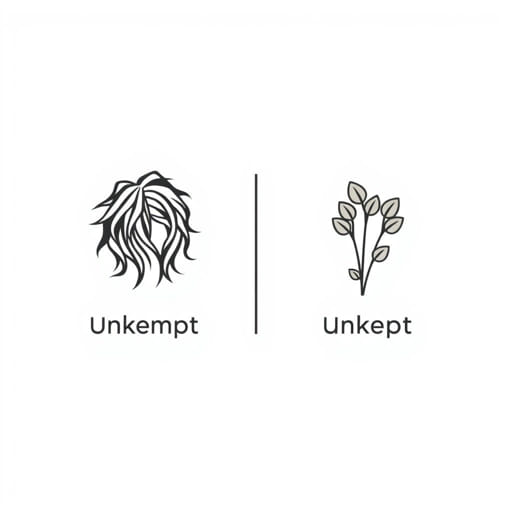
- Unkempt: Think comb. If something is unkempt, it’s messy, disheveled, or not combed properly. Usually refers to appearance.
- Unkept: Think keep as in maintain. If something is unkept, it means it wasn’t kept in good condition or a promise wasn’t kept.
Associating unkempt with messy hair or untidy appearance and unkept with maintenance or fulfillment can make it easier to choose the correct word.
Usage in Different Contexts
Appearance and Physical Description
Use unkempt when describing people, animals, or places that look messy or disorganized.
- Her unkempt hair gave her a carefree look.
- The unkempt lawn was full of tall grass and weeds.
Maintenance, Promises, and Conditions
Use unkept when talking about something not maintained or promises not fulfilled.
- The unkept agreement caused disputes between the partners.
- The unkept garden showed signs of neglect.
Synonyms and Related Words
Understanding synonyms can also clarify meanings:
- Unkempt: messy, disheveled, scruffy, untidy, neglected
- Unkept: neglected, unattended, abandoned, broken (promise), unfulfilled
Summary
Although unkempt and unkept appear similar, their meanings and usages are quite different. Unkempt is an adjective describing an untidy or messy appearance, often related to hair, clothing, or physical surroundings. On the other hand, unkept is the past participle indicating something that was not maintained, preserved, or a promise that was not kept. Confusing these words can lead to misunderstandings, so it is important to learn their distinctions. Remembering their origins unkempt from combing and unkept from keeping can help you use them correctly. Proper use of these words not only improves your English proficiency but also enhances clarity and precision in communication.