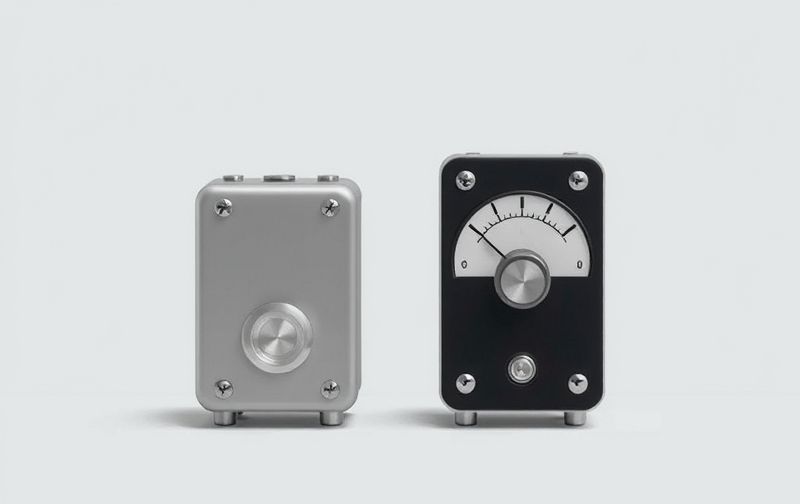
Resistor and Rheostat Difference Understanding Their Roles and UsesIn electronics, resistors and rheostats are common components used to control electrical current. While they may seem similar at first, they serve different purposes and have distinct characteristics. Understanding the difference between a resistor and a rheostat is important for anyone working with circuits, whether you are a student, hobbyist, or professional.
What Is a Resistor?
A resistor is a passive electrical component designed to provide a fixed amount of resistance in a circuit. Its primary function is to limit or regulate the flow of electric current, protect components, and divide voltages.
-
Fixed Resistance Most resistors have a constant resistance value that does not change during operation.
-
Construction Typically made from carbon, metal film, or wire wound around an insulating core.
-
Symbol Represented by a zigzag line in circuit diagrams.
Resistors come in various resistance values measured in ohms (Ω), and their precise value is often indicated by color bands.
What Is a Rheostat?
A rheostat, on the other hand, is a variable resistor. It allows users to adjust the resistance within a circuit manually.
-
Variable Resistance Rheostats are designed to change resistance smoothly by moving a sliding contact over a resistive material.
-
Uses Commonly used to control current flow, adjust light brightness in dimmer switches, or vary motor speed.
-
Construction Usually consists of a coil of resistive wire with a movable wiper.
Because of their adjustable nature, rheostats offer flexibility in controlling electrical parameters dynamically.
Key Differences Between Resistor and Rheostat
1. Resistance Type
-
Resistor Provides fixed resistance, designed to maintain a constant resistance value.
-
Rheostat Offers variable resistance, adjustable to control current or voltage.
2. Functionality
-
Resistor Primarily limits current or divides voltage in circuits.
-
Rheostat Used for adjusting current or voltage dynamically, such as dimming lights or controlling motor speed.
3. Construction and Design
-
Resistor Small, compact, and designed to be static.
-
Rheostat Larger, with a movable part for resistance adjustment.
4. Terminals
-
Resistor Has two terminals only.
-
Rheostat Generally has two or three terminals. Two terminals if used as a simple variable resistor, or three if used as a potentiometer.
How Resistors and Rheostats Work in Circuits
A resistor simply offers resistance in the circuit path to limit current flow according to Ohm’s Law V = IR (Voltage = Current × Resistance)
A rheostat adjusts resistance by changing the length of the resistive path that current travels through. By moving the wiper, it increases or decreases resistance, thus controlling the current flow.
Practical Applications of Resistors
Resistors are found in almost every electronic device. Some common uses include
-
Protecting LEDs by limiting current.
-
Dividing voltage for sensors and circuits.
-
Controlling signal levels in audio equipment.
-
Pull-up or pull-down resistors in microcontroller circuits.
Practical Applications of Rheostats
Rheostats are commonly used in applications where variable control is needed
-
Dimming lamps or controlling brightness.
-
Adjusting speed of electric motors.
-
Regulating current in laboratory experiments.
-
Volume control in some older audio devices.
Advantages and Disadvantages
Resistors
-
Advantages Reliable, stable, simple to use, and available in many sizes and values.
-
Disadvantages Cannot adjust resistance once installed; limited to fixed values.
Rheostats
-
Advantages Allows manual adjustment of resistance; versatile in applications needing variable control.
-
Disadvantages Bulkier and more expensive than fixed resistors; moving parts may wear out over time.
Choosing Between Resistor and Rheostat
Selecting the right component depends on your circuit requirements
-
Use a resistor when you need a stable, fixed resistance.
-
Choose a rheostat when you want to vary the resistance and control current or voltage on the fly.
Common Confusions Explained
Some people confuse rheostats with potentiometers, which are also variable resistors. The main difference is
-
Rheostat Controls current and is connected in series.
-
Potentiometer Controls voltage and is connected as a voltage divider.
Summary Understanding Their Roles Clearly
-
Resistor Fixed resistance, controls current flow steadily.
-
Rheostat Variable resistance, used for adjustable control in circuits.
Both are essential components in electronics, serving different but complementary roles. Knowing their differences helps in designing and troubleshooting circuits effectively.
SEO Keywords
resistor vs rheostat, difference between resistor and rheostat, resistor and rheostat uses, what is a rheostat, fixed resistor meaning, variable resistor explanation, resistor in electronics, rheostat applications, electronic components difference.
Understanding the distinction between a resistor and a rheostat is fundamental for anyone interested in electronics. With this knowledge, you can choose the right component for your project, ensuring better performance and control in your electrical circuits.