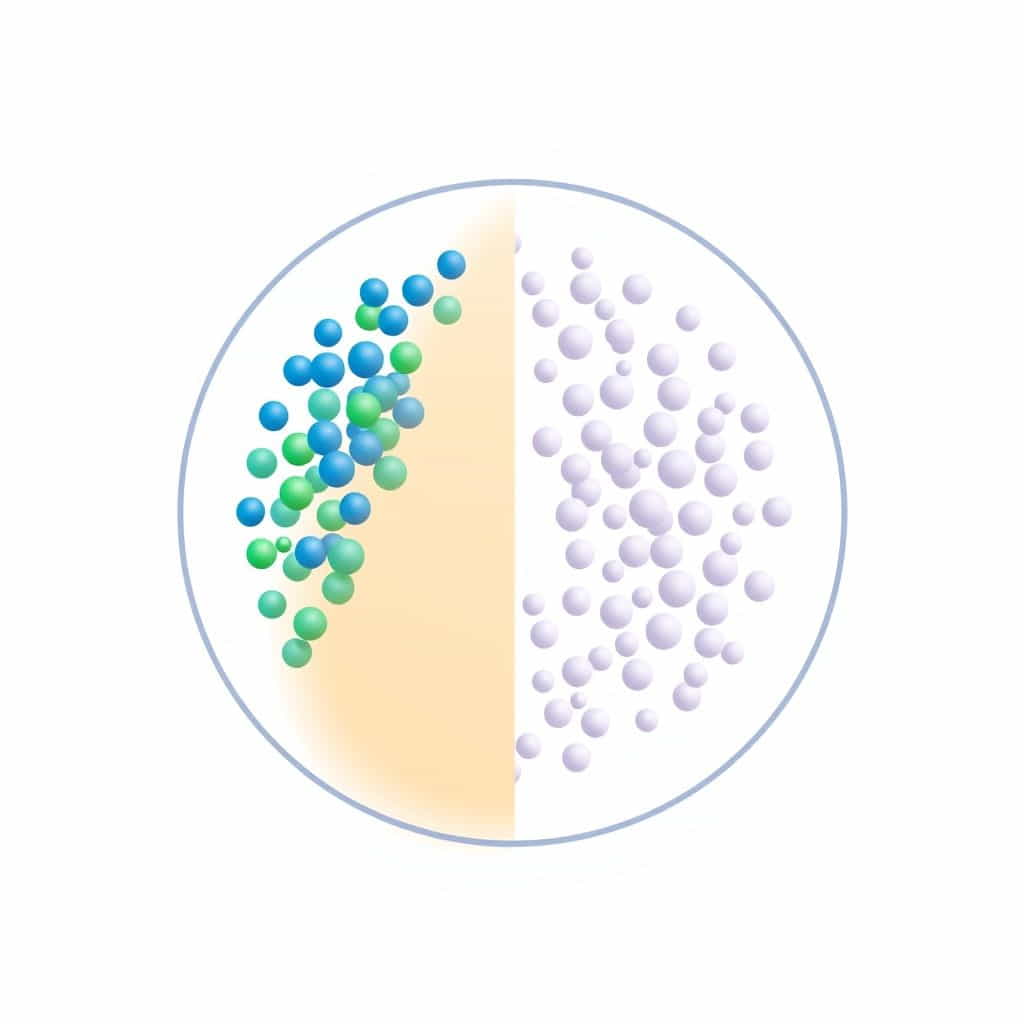
Understanding the Definition of Rarefaction in ScienceIn scientific terms, rarefaction refers to the process of reducing the density of a substance, especially in the context of gases or sound waves. It is a concept that plays a crucial role in fields like physics, acoustics, and meteorology. Rarefaction is often used to describe how ptopics are spread apart in a medium, and its effects can be observed in various natural and experimental settings. In this topic, we will delve into the definition, characteristics, and importance of rarefaction in science.
What is Rarefaction?
Rarefaction is a phenomenon that occurs when the pressure within a medium decreases, leading to the expansion of ptopics or molecules. This term is most commonly used in the study of sound waves, gaseous systems, and waves in general. In simple terms, rarefaction is the opposite of compression, where ptopics are pushed closer together.
In the context of sound waves, rarefaction occurs when the ptopics of a medium (usually air) are pulled apart during the propagation of the sound. When a sound wave travels through air, it creates alternating areas of compression and rarefaction. These variations in pressure and ptopic displacement are what enable the sound to travel.
Characteristics of Rarefaction
1. Decreased Ptopic Density
The primary feature of rarefaction is the reduced density of ptopics within a given space. When a sound wave or a mechanical wave moves through a medium, the ptopics at certain points of the wave experience a decrease in pressure and spread out. This creates an area where ptopics are farther apart than their normal resting positions.
In gases, rarefaction happens as air molecules move apart due to a decrease in pressure. In solids or liquids, the effect of rarefaction is less pronounced but can still be observed in the way waves move through these media.
2. Occurrence in Sound Waves
Sound waves are a classic example of rarefaction. A sound wave consists of alternating compressions and rarefactions. During compression, ptopics are pushed together, resulting in high pressure. During rarefaction, the ptopics are spread apart, causing low pressure. This cycle of compression and rarefaction allows the sound to travel through a medium, whether it be air, water, or solid objects.
It is in the areas of rarefaction that sound waves lose energy, as the ptopics are not densely packed to transmit energy effectively. However, the interaction of compression and rarefaction is what creates the vibrational energy that we perceive as sound.
3. Role in Waves and Energy Transmission
Rarefaction plays a significant role in the way waves propagate and transfer energy. Whether the wave is a sound wave, seismic wave, or electromagnetic wave, the process of rarefaction is essential to the transfer of energy from one point to another. In sound, rarefaction represents the part of the wave where the energy is in a low-pressure state, allowing the wave to continue through the medium.
Rarefaction can also occur in the propagation of light waves in specific media under certain conditions, although this effect is not as noticeable as in sound waves. The spread of energy due to rarefaction is a fundamental aspect of the wave’s ability to move through various substances.
Rarefaction and Compression A Complementary Relationship
Rarefaction and compression are complementary phases that occur in waves. When sound or mechanical waves move through a medium, the ptopics experience alternating regions of compression (high pressure) and rarefaction (low pressure).
-
Compression is the phase where ptopics are forced together, increasing their density.
-
Rarefaction is the phase where ptopics are spread apart, decreasing their density.
These two processes work together to enable the continuous propagation of sound or other waves. Without rarefaction, waves would not be able to travel efficiently, and without compression, the wave would lack the necessary energy to continue through a medium.
Applications of Rarefaction
1. Sound and Acoustics
In acoustics, rarefaction is an essential concept for understanding how sound waves travel through different media. For instance, in concert halls, the acoustics are designed in a way that enhances the movement of sound waves, maximizing the alternating effects of compression and rarefaction to create clear and rich sound.
Additionally, in speakers and other sound equipment, rarefaction and compression are used to produce sound by manipulating the movement of air molecules. The vibrations from the speaker diaphragm create areas of compression and rarefaction, allowing sound waves to be transmitted into the environment.
2. Meteorology and Pressure Systems
Rarefaction also plays a role in meteorology, particularly in the study of pressure systems and weather phenomena. Changes in air pressure due to rarefaction are often associated with the movement of weather systems such as low-pressure areas and cyclones. In these systems, the air molecules spread apart in rarefied areas, contributing to the formation of storms and winds.
3. Engineering and Fluid Dynamics
In fluid dynamics, rarefaction is observed in the behavior of gases and liquids, particularly in processes such as the venturi effect. In areas of a fluid stream where rarefaction occurs, pressure decreases, leading to changes in flow velocity and dynamics. Engineers use these principles to design systems like jet engines, pumps, and airflow systems to optimize performance and efficiency.
4. Medical Applications
In medical science, rarefaction is involved in technologies such as ultrasound imaging. Ultrasound waves, which are essentially sound waves at higher frequencies, rely on compression and rarefaction to generate images inside the body. The differences in pressure caused by rarefaction and compression help to create the visual images used in medical diagnostics.
Rarefaction in Nature
1. Seismic Waves
Rarefaction is not limited to sound waves; it is also a significant component of seismic waves. These waves, which travel through the Earth’s crust during earthquakes, contain regions of both compression and rarefaction. The behavior of these waves helps scientists study the Earth’s interior and provides valuable data for earthquake prediction and monitoring.
2. Ocean Waves
Rarefaction can also be observed in the movement of ocean waves. As waves travel across the surface of the water, areas of compression (high points of the wave) and rarefaction (low points of the wave) form. This alternation allows the wave to maintain its energy and move over long distances across the ocean.
In summary, rarefaction is a fundamental concept in wave theory and physics. It occurs when ptopics in a medium experience a reduction in density, leading to areas of low pressure. While rarefaction is commonly associated with sound waves, it also plays a critical role in many other scientific and natural phenomena, including seismic waves, meteorology, and even medical technologies.
Understanding rarefaction enhances our ability to analyze and manipulate wave behaviors in various fields, from acoustic engineering to fluid dynamics. By studying how rarefaction works and its effects on different media, scientists can gain deeper insights into how energy is transferred through waves and how the physical world operates.