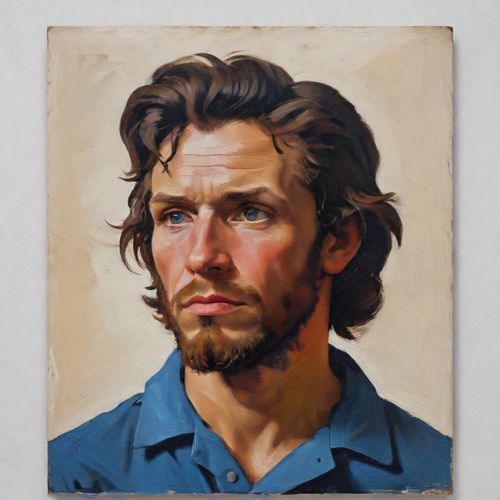
David’s Masterpiece and the Portrayal of a Revolutionary Spirit in ArtJacques-Louis David, one of the most influential painters of the Neoclassical era, used his art as a powerful political and social tool. His works are not only admired for their aesthetic mastery but also for their deep connection to the revolutionary movements of his time. One of his most renowned pieces, often regarded as a true masterpiece, captures the essence of a revolutionary figure with striking intensity and emotional depth.
David’s Role in Revolutionary France
A Painter of Political Conviction
David was not merely an artist he was an active participant in the French Revolution. As a member of the Jacobin Club and a close associate of Maximilien Robespierre, he used his artistic talent to support the revolution’s ideals. His paintings often portrayed heroes, martyrs, and moral strength, aligning closely with republican values.
Art as Propaganda
David understood the power of visual art in shaping public opinion. His work was a form of propaganda, intended to stir emotion, promote political ideals, and immortalize revolutionary figures. This made him a central figure in the visual culture of revolutionary France.
The Masterpiece The Death of Marat
Overview of the Painting
One of David’s most powerful revolutionary paintings is The Death of Marat (1793). This painting depicts the murdered revolutionary leader Jean-Paul Marat, lying lifeless in his bath after being assassinated by Charlotte Corday. David’s portrayal transforms Marat from a mere political figure into a timeless martyr for the cause.
Composition and Symbolism
David paints Marat with a calm and almost saint-like expression, his body gracefully slumped, holding a letter from his assassin. The bath, a humble wooden box, is devoid of lavish detail, focusing attention on Marat’s face and the bloodstained paper. The image is both intimate and tragic, echoing the visual language of religious martyrdom.
Revolutionary Ideals in Visual Form
Portraying Virtue and Sacrifice
In this artwork, David presents Marat as a symbol of virtue and sacrifice. He is not surrounded by riches or power, but rather by the simplicity of revolutionary struggle. His pen and letter signify dedication to the people, suggesting that his true weapon was his voice and ideas.
The Hero as a Common Man
Unlike classical heroes adorned in armor or surrounded by glory, David’s Marat is fragile and human. This representation marks a shift in how society viewed heroism during the revolution. The revolutionary hero was not a distant god or king, but a citizen who died for justice.
The Power of Emotion in Neoclassical Art
Controlled Drama and Clarity
David’s neoclassical style is marked by order, clarity, and balance. However, within this structure, he managed to convey deep emotional resonance. The Death of Marat is not dramatic in a chaotic sense, but rather in its quiet dignity. The emotion is restrained but powerful, reflecting revolutionary stoicism.
Visual Simplicity, Emotional Complexity
The painting’s minimal background, limited color palette, and clean lines enhance its emotional impact. Viewers are drawn to Marat’s pale skin, the red of his wound, and the text in his hand. Every element has purpose, reinforcing the message of loss and sacrifice.
David’s Legacy and the Revolutionary Image
A Lasting Influence on Political Art
David’s approach to portraying revolutionaries set the tone for future generations of political artists. He showed how art could celebrate individuals not just for their beauty or status, but for their ideals and actions. His ability to humanize political figures changed how leaders and martyrs were represented.
Beyond the French Revolution
Although rooted in the events of the French Revolution, David’s works have transcended their original context. His portrayals of revolutionaries have inspired movements across the world, from Latin American independence to 20th-century liberation struggles. His art became a universal language of resistance and heroism.
Art as a Historical Document
Painting as Witness to History
David’s masterpiece serves not only as a tribute to Marat, but also as a visual record of the revolution. It captures the mood of the time intense, moralistic, and charged with ideological purpose. Through his brush, David bore witness to one of the most transformative periods in modern history.
Bridging Art and Politics
David proved that painting was not merely for decoration or beauty it could be a political act. His work blurred the line between artist and activist, showing that art could shape national identity, public memory, and political discourse.
Criticism and Reinterpretation
Controversy Over Glorification
While The Death of Marat was celebrated in revolutionary France, it also faced criticism. Some saw it as glorifying violence or oversimplifying complex political realities. Critics argued that by turning Marat into a martyr, David ignored his role in the Reign of Terror.
Modern Interpretations
In contemporary times, the painting continues to be studied, reinterpreted, and even parodied. It remains relevant not only as a historical artifact but also as a conversation starter about the role of art in politics, media, and activism.
Conclusion The Enduring Power of David’s Vision
Jacques-Louis David’s The Death of Marat remains one of the most powerful portrayals of a revolutionary in art history. It captures the passion, pain, and sacrifice that defined the French Revolution, while also exploring deeper themes of justice, morality, and human dignity.
David’s masterpiece shows that a revolutionary is not defined by violence or chaos alone, but by commitment to change and the willingness to suffer for it. Through his careful composition and profound emotional depth, David created not just a painting, but a symbol of the revolutionary spirit that still resonates today.


